


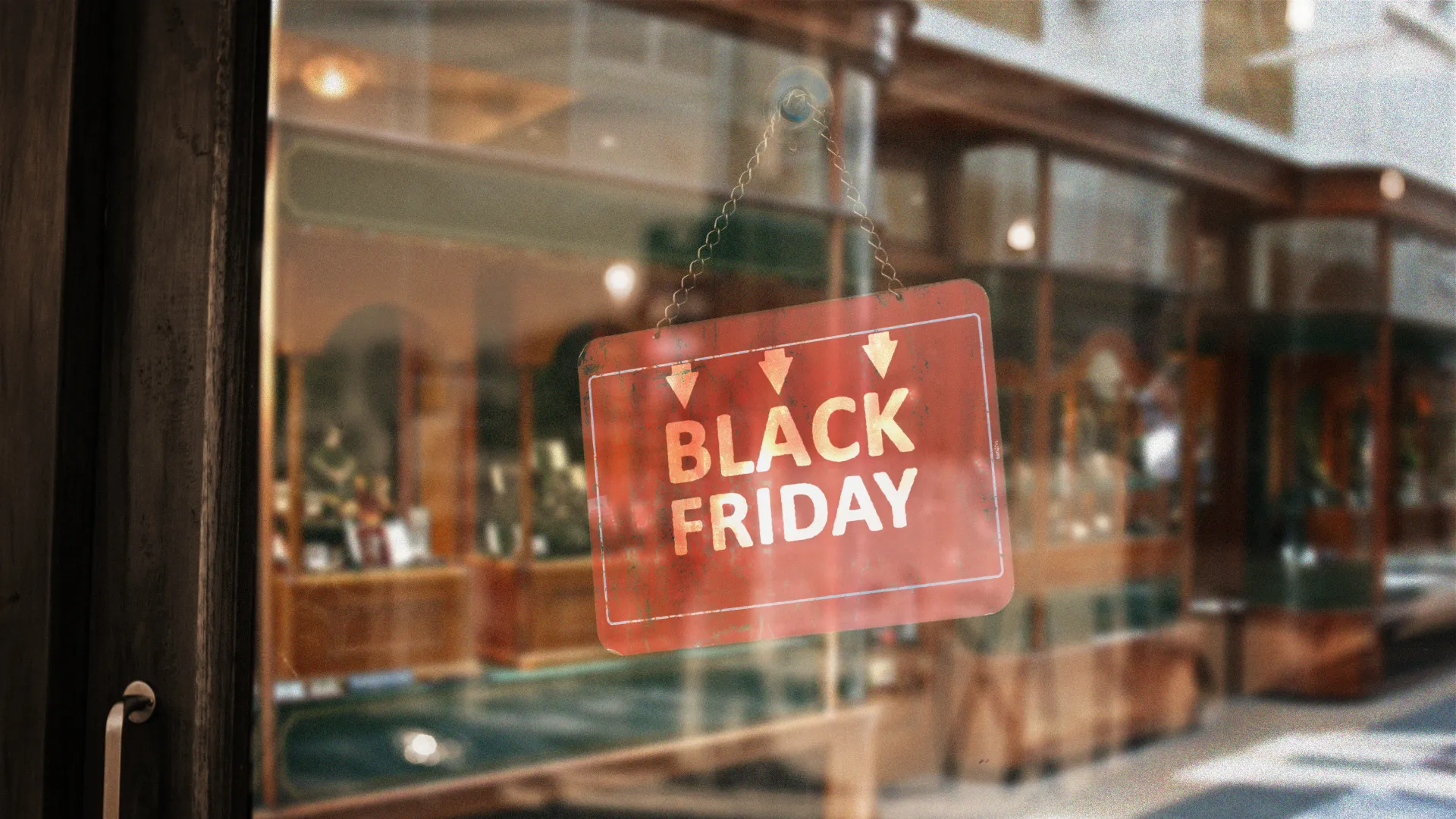
Black Friday is now a worldwide phenomenon. Every year, millions of people look forward to it to snap up exceptional deals, whether online or in store. But what is the real origin of this tradition that has people queuing at dawn, filling their virtual baskets in the blink of an eye, or even braving the cold and the crowds to get spectacular discounts?
What is Black Friday?
Black Friday is a big day of sales that started in the United States and then spread more or less everywhere in the world. It takes place on the Friday after Thanksgiving, so the day after the fourth Thursday of November. On this day, you can take advantage of big discounts in many areas, such as technology, fashion, household appliances and even leisure.
The beginnings of Black Friday: a Thanksgiving affair

The history of Black Friday goes back to well before the term became synonymous with a buying frenzy. In the United States, the day after Thanksgiving, celebrated on the fourth Thursday of November, traditionally marked the start of the Christmas shopping season.
Shops offered discounts to encourage people to start their end-of-year shopping, which made this day a key moment for retailers and consumers. At that time the expression “Black Friday” was not yet in use, but the idea of a day devoted to mass shopping was already firmly rooted in American culture.
The origin of the name “Black Friday”
The term “Black Friday” appeared in the 1950s in Philadelphia. The local police used the expression to describe the chaos in the city the day after Thanksgiving, when crowds flooded the streets to shop and to attend the annual Army-Navy football game.
For police officers, it was a “black day” because of the long working hours and the crowd management. In the 1980s, the term evolved to take on a more positive meaning. Retailers reinvented the expression to turn it into a marketing event, putting forward the idea that this day marked the moment when shops’ accounts went from “red” (loss) to “black” (profit).
The rise of Black Friday
Black Friday quickly gained popularity with the evolution of commerce and technology. In the 1990s, it became a national phenomenon in the United States, with big store chains offering aggressive deals and opening their doors at midnight after Thanksgiving.
Images of huge crowds, of customers fighting over rock-bottom-priced items, and of long queues became common. This day also gave rise to new trends such as “Cyber Monday”, a day devoted to online discounts, which has become one of the biggest online shopping days of the year.
The global impact of Black Friday
What was originally a local event in the United States quickly spread across the world. Today, Black Friday is celebrated in many countries, even where Thanksgiving is not a tradition. Globalisation and the rise of online commerce have played a key role in this expansion. International brands and online commerce platforms such as Amazon have popularised the event outside the United States.
Criticism and controversy
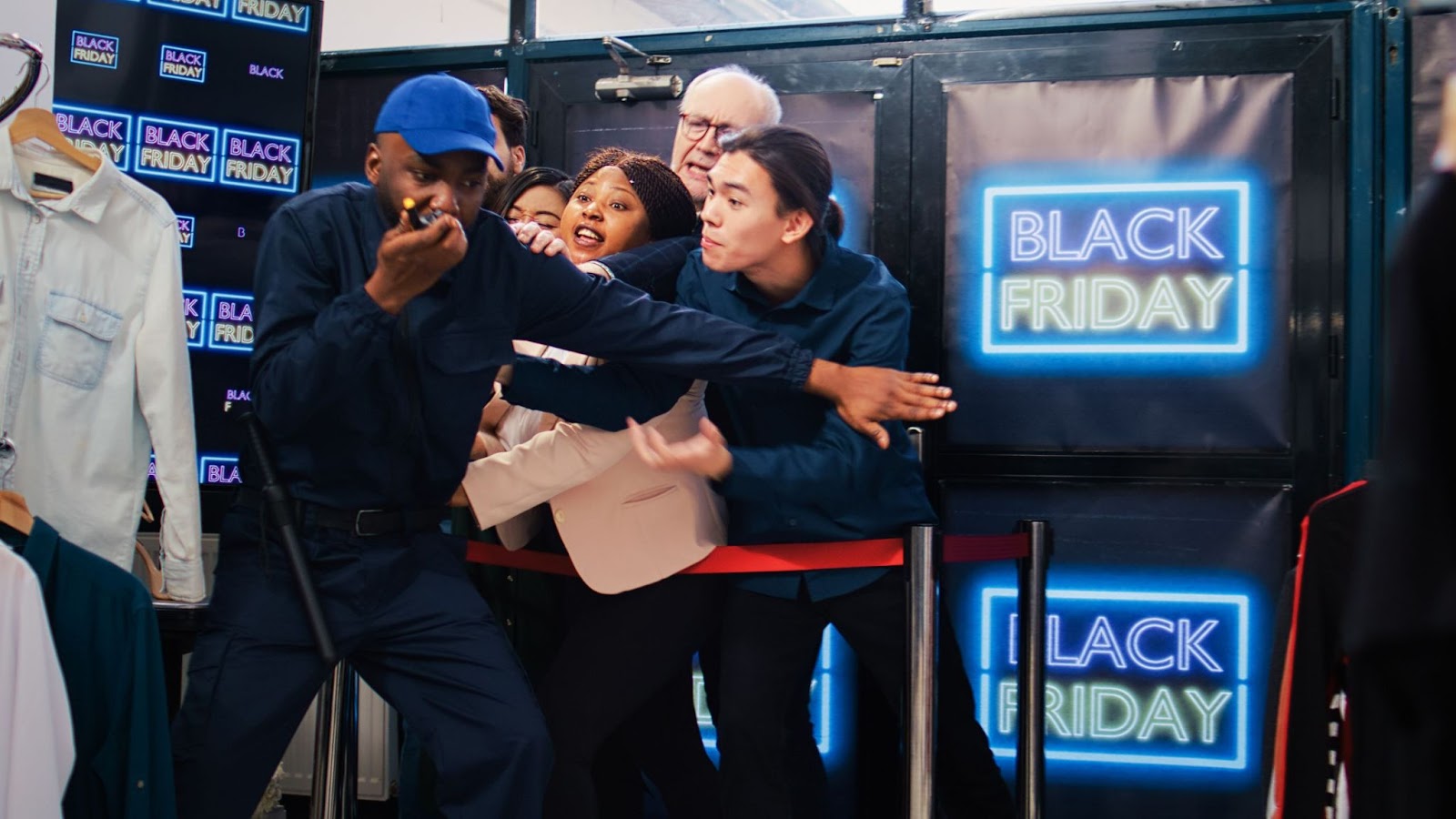
Despite its popularity, Black Friday is criticised for symbolising overconsumption and materialism. Scenes of crowds jostling for the best deals, sometimes at the expense of safety, have often made the headlines. There are also concerns about the environmental impact, with an increase in waste and carbon emissions linked to the production and delivery of goods. The difficult working conditions of retail staff are also denounced. In response, some retailers are rethinking their approach to Black Friday, by closing their doors to encourage family time or by promoting more responsible consumption practices.
Black Friday and marketing on social media and the web
Brands compete in ingenuity to catch the attention of consumers. To that end, social media and the web play an important role in these strategies. But how do businesses prepare for Black Friday digitally? Which tools do they use to maximise their impact?
Preparing ahead: building excitement
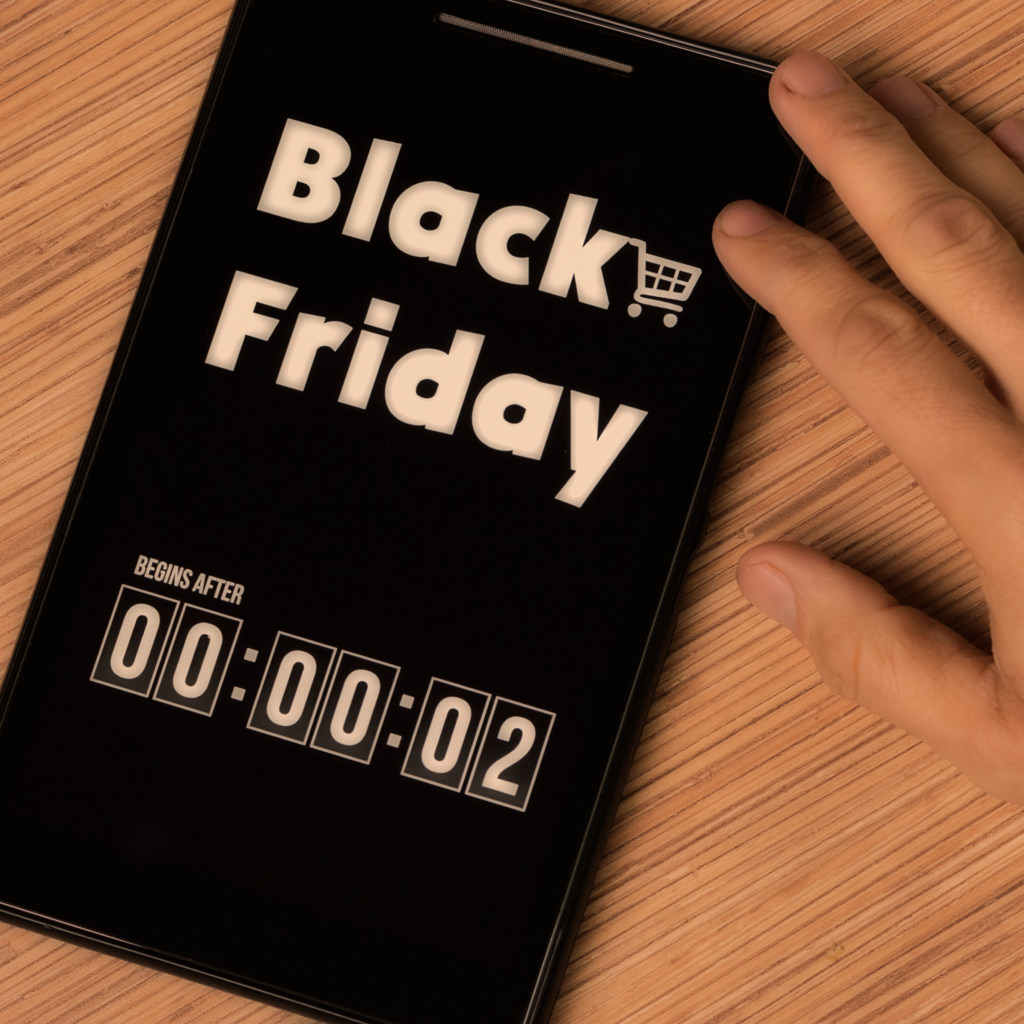
The success of Black Friday starts well before the big day. As a brand, it is crucial to set up teasing campaigns weeks, even months in advance. Build anticipation by using countdowns, previews of promotions and engaging messages on your social media.
For example, start promoting your offers as early as October to arouse curiosity and create anticipation in your audience. This will increase engagement on the day.
Using influencers: creating a personal link with you
Influencers are powerful allies to strengthen your credibility and reach a wider audience. By working with them, you can not only increase the visibility of your offers, but also build a more personal connection with consumers. Encourage influencers to share exclusive promo codes, to do unboxings or to recommend your products in an authentic way.

Targeted advertising: speaking directly to you

To get the most out of your advertising investment, bet on targeted campaigns. Use tools such as Facebook Ads and Google Ads to segment your audience according to buying behaviour, interests and demographic data. This precise targeting lets you show your ads to the right people, maximising the return on investment.
For example, start promoting your offers as early as October to arouse curiosity and create anticipation in your audience. This will increase engagement on the day.
Live engagement and interaction: creating urgency for you
On Black Friday itself, you need to grab consumers’ attention quickly and encourage them to act immediately. Use the live features of social media such as Instagram Stories, Facebook Lives, or even real-time tweets to interact with your audience. Run flash sales or reveal exclusive offers live to create an atmosphere of urgency.

Email marketing and remarketing: not forgetting you, even if you hesitate

Don’t underestimate the power of email marketing during Black Friday. As a brand, you should use this tool to send personalised newsletters, abandoned basket reminders and exclusive offers. Remarketing is also essential to win back potential customers who visited your site without completing their purchase.
For example, start promoting your offers as early as October to arouse curiosity and create anticipation in your audience. This will increase engagement on the day.
Creating dedicated landing pages: making conversion easier
Finally, make sure your Black Friday offers are gathered on dedicated landing pages, optimised for conversion. These pages should be clear, visually attractive and easy to navigate. Include visible calls to action, customer testimonials to reassure potential buyers and time-limited offers to create a sense of urgency.

CONCLUSION
For many, Black Friday is a day not to be missed, a chance to make savings before the festive season. For others, it is a day that raises questions about our relationship with consumption. Whatever your view, Black Friday remains an unmissable event, whose impact goes well beyond the scope of commercial promotions.

Lola MinervaCommunication and web marketing
Communication and web marketing expert at AR Digital, with a master’s degree in communication and web marketing. Since 2019 she has designed digital and content strategies for brands in France and Luxembourg.