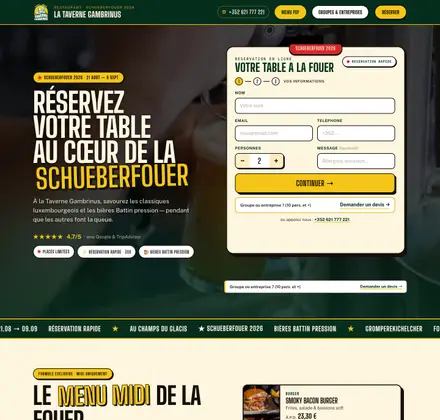
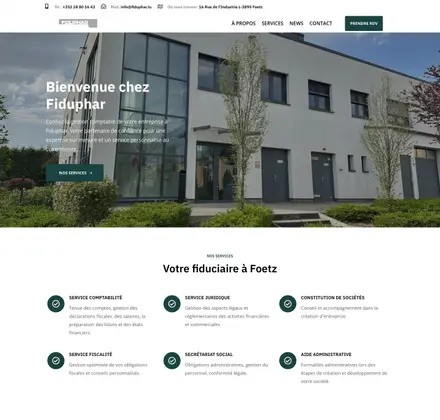
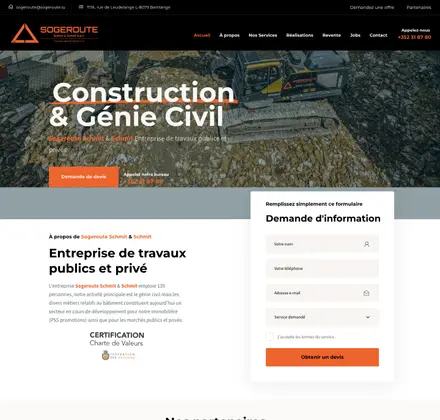
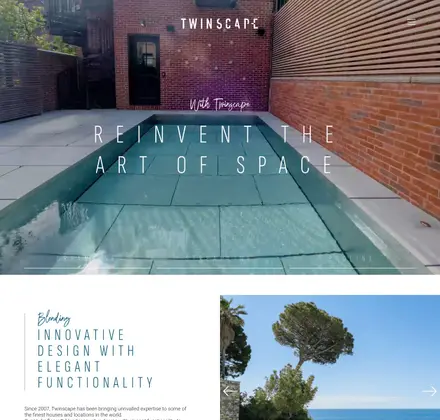


Are you in real estate and want to showcase your properties effectively? Your website is your digital shop window, a key tool to attract new clients and stand out from the competition.
But how do you build a real estate website that is effective, well ranked and optimised for conversion? Here is a complete step-by-step guide to building a high-performing site and attracting more prospects.
Define your objectives and your target audience
Before you even start building your site, ask yourself the right questions:
What is your main objective?
- Attract new clients?
- Generate leads?
- Gain local or national visibility?
Who are your ideal clients?
- Investors
- Families
- First-time buyers
- Tenants
Example: If you target families, your site should showcase properties close to schools, parks and child-friendly facilities.
Choose a suitable platform
The choice of CMS (Content Management System) is crucial. Pick a solution that fits your needs and technical skills.
- WordPress: a flexible solution with many plugins and themes specialised in real estate.
- Wix: ideal for beginners thanks to an intuitive interface.
- Squarespace: perfect for a site with a modern, clean design.
Example: If you want to customise your site with advanced features (search engine, virtual tours), WordPress with a theme such as “Real Homes” is an excellent choice.
Take care over design and user experience (UX)
Good design increases visitor retention and improves the conversion rate.
The essential elements of good real estate design:
- Clear, intuitive interface: smooth, well-structured navigation
- Professional visuals: HD photos, videos and virtual tours
- Responsive site: display adapted to mobiles and tablets
- Fast loading: optimise your images and use high-performance hosting
Example: Go for a clean design with an airy layout and clear action buttons to maximise conversions.
Write impactful, SEO-optimised content
Your site’s content must be informative, relevant and optimised for search engines.
Key content elements:
Detailed property descriptions: highlight the strengths and the surroundings
Real estate blog: articles on trends, buying advice and practical guides
“About” page: inspire trust with a clear presentation of your agency
SEO optimisation:
- Use of strategic keywords (example: “apartment for sale Luxembourg”, “house for sale Belgium”)
- Well-structured heading tags (H1, H2, H3)
- Attractive meta descriptions
- Internal and external links to improve the site’s authority
Example: Write a blog article titled “5 mistakes to avoid when buying your first property” to attract first-time buyers.
Add effective calls to action (CTAs)
Your visitors need to be prompted to act through visible, engaging CTAs.
Here are a few suggestions for impactful CTAs:
- “Request a viewing”
- “Download our buying guide”
- “Get a free valuation”
Example: Place a clearly visible “Book an appointment” button on every property page to increase conversions.
Include client reviews and testimonials
Client reviews strengthen your credibility and encourage prospects to trust you.
Best practices:
- Include verified reviews with photos
- Place testimonials on the home page and the service pages
- Ask your clients for feedback after every transaction
Example: Add a “They trusted us” section with testimonials from satisfied clients.
Add key features for the user experience
Your site must offer smooth navigation and practical tools to make searching for properties easier.
Must-have features:
- Advanced search engine: filters by location, price and property type
- Virtual tours: 360° immersion to win over buyers at a distance
- Online chat: to answer prospects’ questions instantly
- Interactive map: location of properties and nearby points of interest
Example: A search engine with advanced filters lets visitors quickly find a property that matches their criteria.
Analyse and improve your site’s performance
Performance tracking with Google Analytics:
- Number of visitors
- Bounce rate
- Most viewed pages
- Form conversions
Continuous optimisation:
- A/B testing on CTAs and key pages
- Improved loading time
- Regular content updates
Example: If you notice a high bounce rate on your home page, test a new layout with a more impactful message.Here is the list of KPIs you absolutely must monitor to measure your website’s performance.
Secure your site and ensure legal compliance
A secure site inspires trust and protects your users’ data.
Best practices:
- SSL certificate: enable HTTPS to secure connections
- GDPR: add a privacy policy and a cookie consent banner
- Regular backups: protect your site against cyberattacks
Example: Add a GDPR-compliant cookie consent pop-up as soon as visitors arrive on your site.
CONCLUSION
Building a high-performing real estate website takes a well-thought-out strategy, SEO optimisation and a smooth user experience.
The keys to success:
- An attractive, responsive design
- Content optimised for SEO
- Features suited to visitors’ needs
- Regular performance tracking
Good news! Thanks to the SME Packages Digital programme, Luxembourg SMEs can benefit from a grant towards building their website.
Contact us today to find out more and make your digital project a reality.