

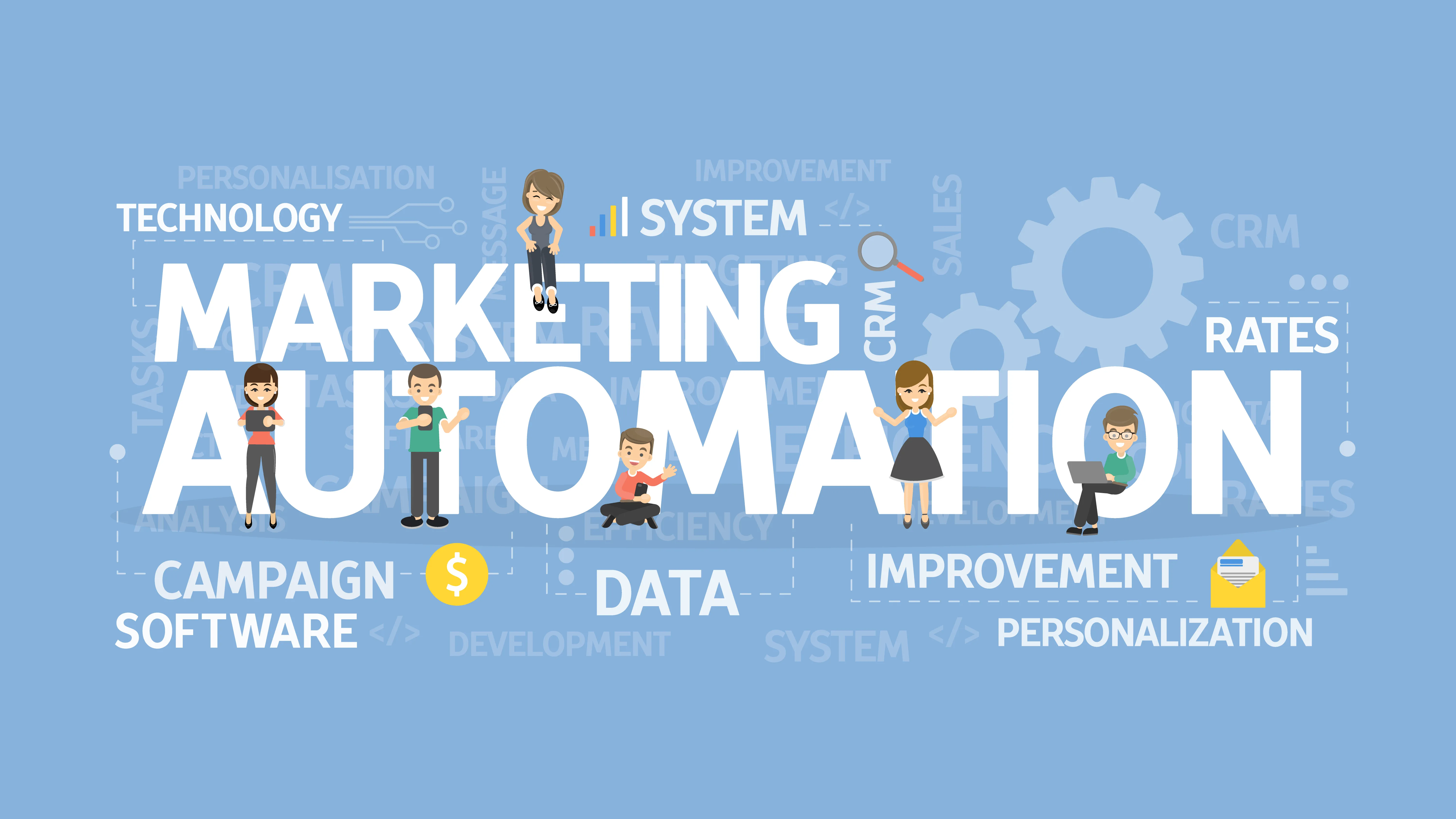
Marketing automation has become a pillar of modern digital marketing. Not a passing trend. A necessity. In this article, we break down the concept, the tools available, and how it can transform your marketing strategy. Whether you are just starting out or looking to optimise what you already have, this guide gives you the keys to implementing marketing automation effectively.
What is marketing automation?
Definition of marketing automation
Marketing automation means using marketing automation software to automate repetitive marketing tasks and marketing campaigns. The aim: free marketing teams from repetitive tasks so they can focus on strategy and the customer relationship.
In practice, a marketing automation tool lets you automate sending emails, segmenting prospects and personalising content according to your visitors’ behaviour. It is an essential part of a high-performing marketing strategy that manages every stage of the customer journey, from lead generation to customer loyalty.
How is it different from standard email marketing? Email marketing sends a newsletter to your whole list. Marketing automation analyses behaviour: Pierre downloads your white paper on Tuesday, he does not open Thursday’s email, so he receives an email on Friday with a tailored offer. It is smart marketing based on data.
Why automation matters in digital marketing
In the highly competitive world of digital marketing, marketing automation is crucial for staying effective and making the best use of resources. Businesses can adapt their marketing strategy to meet customer needs better while managing their prospects more efficiently.
Automation makes it possible to personalise interactions with contacts, improve lead nurturing and optimise marketing automation campaigns. By automating marketing actions, your teams analyse data, adjust strategies and get a better return on investment. An effective inbound marketing strategy relies heavily on marketing automation to attract and convert prospects.
The figures speak for themselves: companies using marketing automation generate, on average, 451% more qualified leads.
The key elements of marketing automation
Segmentation and personalisation
Segmenting your database is vital. You cannot send the same message to a B2B prospect who is just discovering your solution and to a B2C customer ready to buy. Segmentation lets you target effectively and personalise your messages.
Lead nurturing
Lead nurturing guides your prospects through the customer journey. You create sequences of content suited to each stage: discovery, consideration, decision. Automated workflows trigger specific marketing actions based on behaviour on the website or through emails.
CRM integration
Integration with a CRM (Customer Relationship Management) system is essential for centralising your data. Here are the main tools:
Type of tool |
Examples |
CRM |
Salesforce, HubSpot |
Marketing automation software |
Marketo, Pardot |
The choice of marketing automation software must match your company’s specific needs. Using the best marketing automation tools makes the difference to the success of a marketing automation project.

The best marketing automation tools
HubSpot: the all-in-one solution
HubSpot stands out for its versatility and its native integration with a CRM. The interface is intuitive, perfect for SMEs that are just starting out. You manage email marketing, lead management and the segmentation of your database, all from a single platform. Price: from 45 EUR/month. HubSpot lets you run a good inbound marketing strategy thanks to its many features.
Salesforce Marketing Cloud: for large organisations
Salesforce Marketing Cloud is a popular option, particularly suited to large companies. Advanced features and the ability to personalise interactions with prospects at scale. Integration with the Salesforce ecosystem is native. Budget: from 1,250 EUR/month.
Marketo: robust and complete
Marketo lets you automate complex marketing campaigns and manage leads effectively across the whole customer journey. A robust solution with a somewhat steep learning curve, but powerful once mastered.
Pardot: B2B focus and lead nurturing
Pardot (owned by Salesforce) is particularly focused on lead nurturing and improving the customer relationship in B2B. If your priority is to qualify your prospects carefully before passing them to sales, Pardot excels at this.
Low-cost and free options
Although complete solutions are often paid, there are free marketing tools to get you started. These free marketing automation tools offer limited features but let you automate some basic marketing tasks: sending personalised emails, basic segmentation.
Some marketing automation platforms offer free versions with limited contact quotas. These free solutions are useful for small businesses or start-ups that want to test the concept before investing in more powerful marketing automation software.
Developing an effective marketing automation strategy
Step 1: define your objectives
To develop an effective marketing automation strategy, define your objectives clearly. Be specific. Not “increase sales” but “convert 25% of downloaded leads into qualified opportunities within 45 days”. Determine exactly what your marketing automation is for:
- Increase lead generation
- Improve lead nurturing
- Optimise the customer relationship
Step 2: segment the database
Segment your database to personalise your messages and target the most relevant prospects. Industry, company size, behaviour on your site, level of engagement. The more precise your segments, the better your automated campaigns perform.
Step 3: map the customer journey
Identify the key touchpoints in the customer journey. List all the stages: discovery, consideration, decision. For each stage, define the content needed and the actions to automate. A prospect in the discovery phase does not get the same message as a prospect ready to sign.
Step 4: create the workflows
Set up automated workflows to trigger specific actions based on how users behave on your website or through emails. Start simple: a welcome workflow, an abandoned basket workflow, a reactivation workflow. Test, measure, adjust. Add complexity gradually.
Step 5: integrate the CRM
Integrating the marketing automation software with the CRM, such as HubSpot or Salesforce, lets you centralise information about contacts and improve the customer relationship. Your sales team receives only qualified leads, with the full history of their behaviour.
Step 6: define your KPIs
A good marketing strategy must include defining key performance indicators (KPIs). Track the open rate and click rate of your emails, the number of leads generated, the rate at which leads convert into customers, and the return on investment of your marketing automation campaigns.
Successful marketing automation campaigns
Successful marketing automation campaigns stand out for their ability to automate repetitive tasks while offering a personalised experience. They use targeted emails, website messages and push notifications to engage prospects at every stage.
Practical examples of automation
Welcome email: after signing up for the newsletter, an automatic email is sent straight away with valuable content.
Abandoned basket: a visitor puts 3 products in their basket. They leave without buying. You automatically trigger:
- Email 1 after 1 hour: simple reminder
- Email 2 after 24 hours: 10% promo code
- Email 3 after 72 hours: urgency and testimonials
Average recovery rate: 15 to 30%.
Lead nurturing: after a white paper download, a 4-week sequence with educational content, customer testimonials and gradual demonstrations. 22% of nurtured leads buy, against 3% without nurturing.
Lead nurturing means sending relevant content according to interests and level of maturity. Marketing automation lets you react in real time to users’ actions. Analysing the results is crucial for optimising marketing campaigns and improving ROI. Marketing teams can then adjust their inbound marketing strategy.

Measuring the success of your strategy
To assess the success of your digital marketing strategy and your marketing automation, put relevant KPIs in place. Analyse user behaviour on your website, the most visited pages, the most downloaded content, and the friction points in the customer journey.
Use this data to adjust your marketing strategy, personalise your messages and optimise your automated workflows. Remember that marketing automation is a continuous process of improvement. Stay alert to new trends in digital marketing. Marketing teams use marketing tools to get precise data on the customer journey.
Mistakes to avoid
Over-automating: automating everything without thinking makes your messages robotic. Keep a human touch in your campaigns. Really personalise, not just “Hello {first name}”.
Neglecting the content: poor automated content is still poor content. Marketing automation amplifies your messages. If they are mediocre, you amplify mediocrity.
Not testing: check your workflows in real conditions before switching them on at scale. A single configuration error can spam your entire list.
Forgetting to clean up: outdated contacts pollute your statistics and cost money (billing is by number of contacts). Clean your database regularly.
Conclusion
Marketing automation is no longer optional in 2025. It has become standard for staying competitive. Choose the right marketing automation tools for your needs, your budget and your marketing maturity. Start with a simple marketing automation project, measure, adjust, and add complexity gradually.
Results are not instant. Allow 3 months at least to see the first real impact. But once the machine is up and running with your marketing automation campaigns, it runs by itself and delivers steady results. The hardest part is not the technology. It is defining a real strategy before you automate your marketing campaigns. A poor automated process is still a poor process. Just faster.
Useful links
- Website monitoring: the best tools for keeping an eye on your site
- Building a website for small businesses and SMEs: a simple, complete guide
- HubSpot; Salesforce; Marketo; Pardot
To make your brand visible in AI answers, see also: AI visibility and GEO in Luxembourg.

Lola MinervaCommunication and web marketing
Communication and web marketing expert at AR Digital, with a master’s degree in communication and web marketing. Since 2019 she has designed digital and content strategies for brands in France and Luxembourg.