


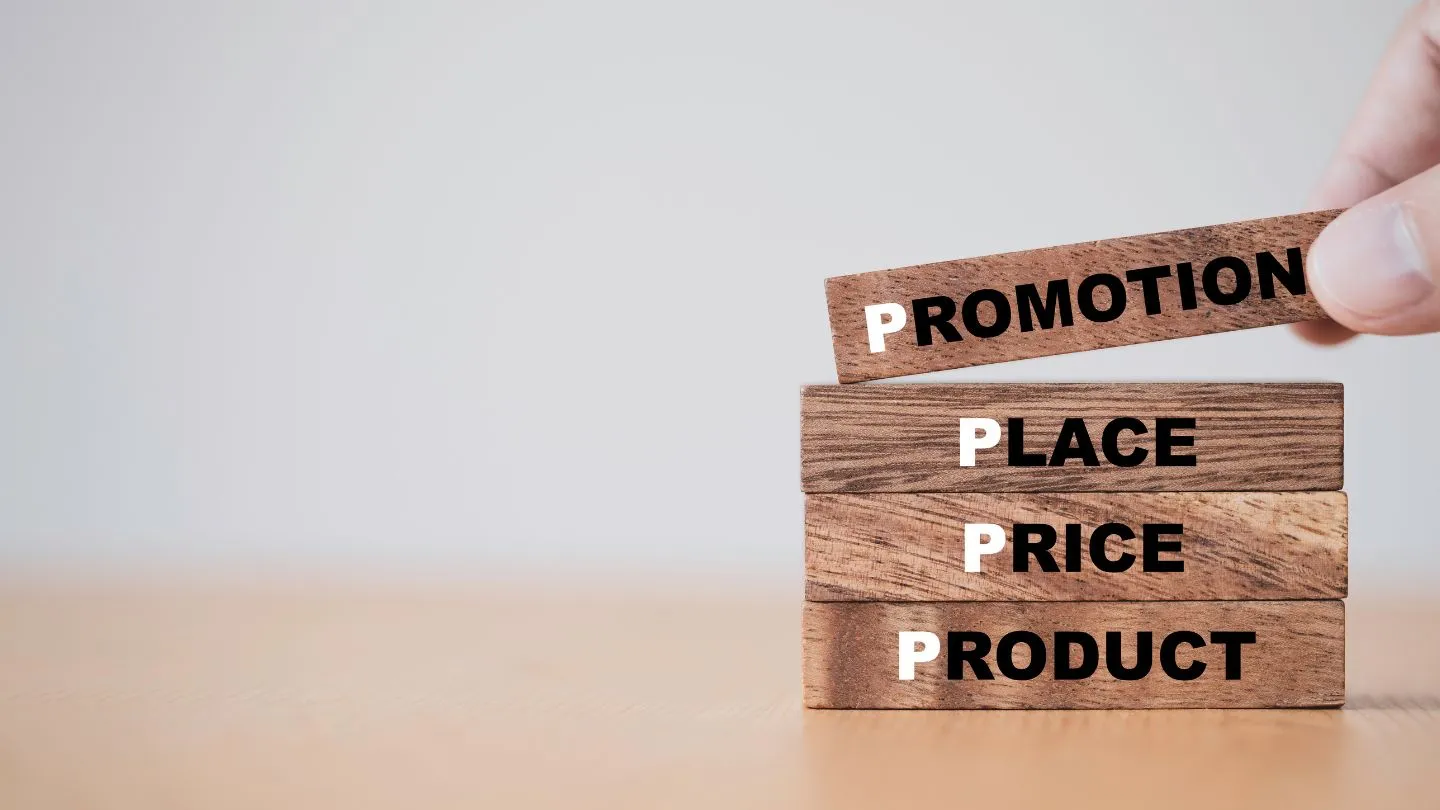
Among the fundamental concepts that guide marketers in their efforts, the marketing mix and its 4Ps remain an essential reference. But what exactly is it? How does it work and why is it important in building an effective marketing strategy? A closer look at the marketing mix and its 4Ps.
What are the 4Ps of the marketing mix?
A brief history
In the 1950s, Neil Borden, a marketing professor at Harvard Business School, laid the foundations of the marketing mix by identifying twelve key marketing elements. He then organised them into four major categories: product, price, promotion and distribution. However, it was Philip Kotler, an eminent professor at the Kellogg School of Management, who in the 1960s and 1970s popularised the concept by simplifying it and presenting it as the “4Ps” of marketing. According to him, these four elements must be managed in an integrated and consistent way to reach business goals.
Definition
The marketing mix concept covers 4 key elements: product, price, distribution and communication. These elements, essential for marketing professionals, are vital to the success of a campaign.
An effective marketing mix strategy must:
- Highlight the benefits of the product for the customer.
- Justify the price of the product by demonstrating its value.
- Select distribution channels suited to the buying behaviour of the target.
- Implement effective communication strategies to reach potential customers.
Why are the 4Ps of the marketing mix essential for your strategy?
The 4Ps of the marketing mix are essential for several reasons:
A consistent strategy
By taking all four elements of the marketing mix into account, businesses can build a consistent, integrated strategy aligned with their customers’ needs and desires.
Market segmentation
The 4Ps allow businesses to segment their market by identifying the specific characteristics of each group of customers and adapting their offer accordingly.
Competitive differentiation
By adjusting the elements of the marketing mix, businesses can set themselves apart from their competitors by offering their customers something unique or extra value.
Responding to the external environment
The 4Ps of the marketing mix give businesses the flexibility to adapt to changes in the external environment, such as shifts in consumer preferences, technology or regulations.
How do you put the 4Ps of the marketing mix in place?
1. The product strategy
To succeed, your product must stand out from the others on the market.
Ask yourself this question: what makes it unique? Review its strengths and weaknesses, as well as those of your competitors. Your product must offer something original, different from what others offer.
As part of your overall strategy, the way you develop your product is essential. It covers what it offers and how it stands out in a competitive market. Define what makes your product special compared with what others do.
And above all, make sure it meets customers’ needs by carrying out thorough market research.
2. The price strategy
To sell well, you must set a price that suits the market you are targeting. This means closely watching what your competitors are doing.
Your price must also match your target audience. Too low, and it might look suspicious; too high, and it risks being out of reach. Your price must reflect the value your customers see in your product. Fair pricing strengthens the credibility of your offer. But be careful not to undervalue your product, at the risk of devaluing it in your customers’ eyes.
3. The distribution strategy (Place)
The way your product is made available to customers is hugely important. This strategy is called the distribution strategy, or “Place”. It concerns where and how people can buy your product.
Choosing where to sell your product is an important step. It can be in a shop, online, on sales websites, and so on. The choice depends on who your customers are, what product you sell and what your goals are. For example, if you are targeting young people, social media and online shops can be interesting.
It is not just a question of visibility. You also need to think about ease of use, costs, and compatibility with your product. A good choice can really simplify buying for your customers and strengthen their trust in your brand.
Besides the place, product availability is key. Customers want to be able to buy when they want. And delivery options matter too. Speed, cost and choices (standard delivery, fast delivery, in-store collection, and so on) can influence customers in their buying decision.
4. The communication strategy (Promotion)

The way you make your product known and spark customers’ interest is what we call the communication or promotion strategy. To succeed, ask yourself two important questions:
- What message do I want to convey about my product? Highlight what makes it special and why people should buy it.
- Where and how will I spread this message? Choose the right places to speak to your customers: ads, social media, special events, and so on.
What matters is that your product is visible where your customers are and that your communication makes them want it.
An example of using the 4Ps of the marketing mix
The L’Oréal Paris “Volume Millions de Cils” mascara (in French) is a perfect illustration of the 4Ps of the marketing mix in action:
- Product: This mascara is designed to add volume and separate lashes for a natural look. Available in several shades, its waterproof formula meets the needs of consumers looking for long-lasting wear.
- Price: Positioned as a quality product at an affordable price, it sits in a mid-range price bracket, making it accessible to a wide audience.
- Place (Distribution): Available through various sales channels, including online and in store, this omnichannel strategy ensures maximum accessibility for consumers.
- Promotion: L’Oréal Paris actively promotes the mascara through various channels such as TV advertising, social media and launch events, featuring influencers and celebrities, as well as attractive in-store promotional offers.
From 4Ps to 7Ps: the evolution of the marketing mix
3 new elements have been added to the 4Ps of the marketing mix. The 7Ps of the marketing mix therefore include the traditional elements of the marketing mix (product, price, distribution, promotion) plus these 3Ps:
- People: represents everyone involved in selling a product or service, from its design to its management. It is crucial to have well-trained staff who share the company’s values in order to maintain an effective customer relationship.
- Process: refers to the various channels consumers use to buy a product or service. Observing and adapting to these processes aims to build customer loyalty.
- Physical evidence: covers all the physical elements that influence how the customer perceives the offer, such as packaging, website design, and so on. It helps legitimise the offer in consumers’ eyes.
CONCLUSION
In conclusion, the classic 4Ps model of the marketing mix remains an essential foundation for any marketing strategy. However, its evolution towards the 7Ps model, including People, Process and Physical evidence, reflects a necessary adaptation to new market realities and the need to place greater emphasis on the customer experience, internal processes and tangible proof of the value offered. This transition shows the growing importance of personalisation, transparency and engagement in meeting consumers’ needs.