



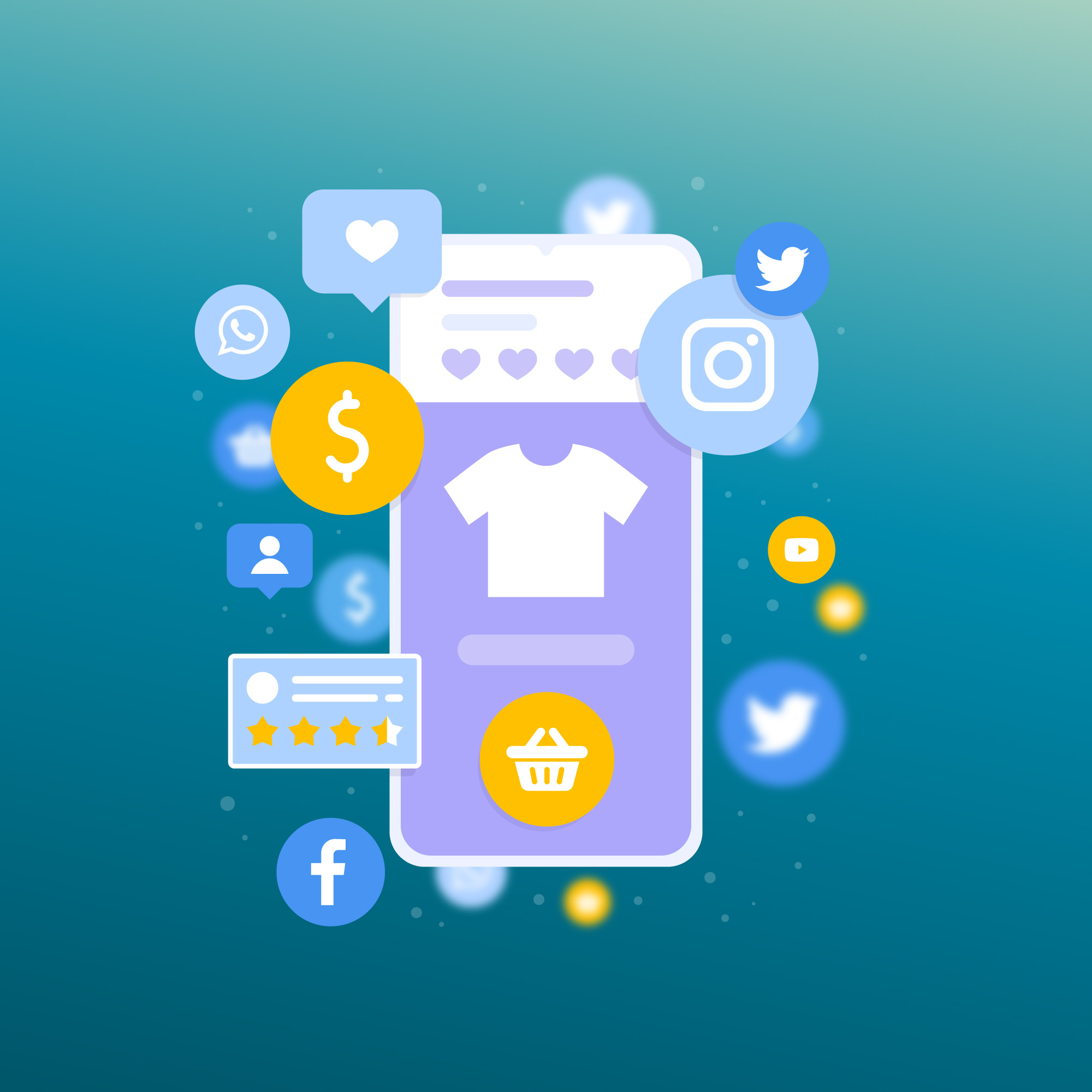
Social commerce is literally exploding all over the world. Today, a great many people buy directly on social media. The platforms are turning into real digital shopping centres.
TikTok Shop is shaking up the market with its addictive video format. Instagram and Facebook improve their shopping features every month. Learn to turn your followers into loyal customers.
What is social commerce in 2025?
Social commerce lets you sell directly on social media. Users discover, compare and buy without leaving the platform. No more redirects to a complicated external e-commerce site.
In concrete terms, you scroll on Instagram and see a nice product. You click on it, pay in three clicks and receive your order. It all happens inside the app in a few seconds.
This smoothness radically transforms the modern buying journey. The time between discovery and purchase drops drastically. Brands capture attention at precisely the right moment.
The figures that prove its effectiveness
The global social commerce market will reach 8.5 trillion dollars by 2030. That is impressive growth of 30.7% a year. The phenomenon is only just beginning.
In France, young people aged 18 to 34 account for 62% of social shoppers. This generation overwhelmingly prefers buying on social networks. Older people are gradually catching up too.
What is more, 68% of consumers discover new products on social networks. Influencer recommendations generate 11 times more engagement than traditional ads. These figures speak for themselves today.
The 5 must-have platforms in 2025
TikTok Shop: the phenomenon of the year
TikTok Shop is establishing itself as the current leader of social commerce. The platform combines short videos, entertainment and instant buying. Sellers get millions of organic views a day.
The short format holds attention within seconds. Internet users discover products naturally. The conversion rate literally explodes compared with classic formats.
Instagram Shopping: commercial maturity
Instagram remains essential for visual commerce today. The Shopping features are built into posts, stories and reels. You create a complete shop directly in the app.
Collections let you categorise your products easily. The built-in checkout simplifies payment to three clicks. More than 130 million people click on Shopping posts every month.
Facebook Marketplace: local proximity
Facebook Marketplace from the Meta group mainly focuses on local commerce. Users buy and sell locally with no hidden commission. It is perfect for second-hand and handmade products in particular.
Built-in messaging makes negotiation between seller and buyer easier. More than 1 billion people use Marketplace every month. That is a colossal figure not to be overlooked.
YouTube Shopping: demonstration content
YouTube is building in features for buying directly within videos. Creators easily tag products in their content. Beauty and tech tutorials generate huge numbers of real sales.
The long format lets you demonstrate products in depth. Trust builds more easily than with a 30-second ad. It is ideal for technical or complex products in particular.
Pinterest: inspiration that converts
Pinterest combines inspiration and buying intent perfectly. 89% of users come to plan future purchases. Rich pins turn images into instantly buyable products.
Visual search finds similar products in one click. It is ideal for home decor, fashion and food. Unfortunately, the platform remains underestimated by many businesses.
4 strategies to maximise your sales

Strategy 1: bet on live shopping
Live shopping recreates the experience of teleshopping, modernised. You present your products live in front of your community. Viewers ask questions and buy instantly live.
Conversion rates are 10x higher than those of traditional e-commerce. The live exchange creates a psychological urgency to buy. Write a script, prepare exclusive offers and host with energy.
Go live at peak times, regularly. Announce your lives a few days beforehand to build anticipation. Answer questions live to overcome objections on the spot.
Strategy 2: collaborate with micro-influencers
Micro-influencers (5,000 to 50,000 followers) create more engagement. Their audience is more loyal and of higher quality. Indeed, 82% of consumers trust their recommendations. The price remains affordable even for small businesses.
Choose influencers who are aligned with your brand values. Favour authenticity over big raw audience numbers. A sincere recommendation always converts better than an obvious ad.
Offer personalised promo codes to measure the impact easily. Give them creative freedom to keep things naturally authentic. Long-term relationships work better than one-off deals.
Strategy 3: use AI to personalise
Artificial intelligence personalises the buying experience of each customer. It analyses behaviour to recommend the right products. Chatbots answer questions 24/7 without interruption.
AI tools create product visuals adapted to each audience. Ad targeting becomes ultra-precise thanks to machine learning. Try ChatGPT to write your engaging posts quickly.
Strategy 4: create shoppable storytelling content
Do not push your products at all costs. Instead, tell captivating and authentic stories. Show your products in real and inspiring situations.
Include your products naturally in your everyday content. Show the behind the scenes, the manufacturing process and customer testimonials. Authenticity creates more trust than cold perfection.
Make heavy use of user-generated content (UGC). Your customers naturally become your best ambassadors. Reposting their posts creates a virtuous circle of growing engagement.
Platform comparison table
| Platform | Star format | Main audience | Conversion rate | Best for |
| TikTok Shop | Short videos | 18-34 year olds | 8-12% | Fashion, beauty, trends |
| Instagram Shopping | Stories/Reels | 25-44 year olds | 5-8% | Lifestyle, home decor |
| Facebook Marketplace | Local listings | 35-55 year olds | 6-10% | Second-hand, crafts |
| YouTube Shopping | Long videos | 25-54 year olds | 4-7% | Tech, tutorials |
| Static images | 25-44 year olds | 5-9% | Home decor, DIY |
Mistakes to avoid at all costs
Never neglect customer service on social media. Most customers expect a quick, personalised reply. A negative comment that goes ignored can ruin your reputation quickly.
Also avoid over-promoting your products in every post. The 80/20 rule works perfectly: 80% value-adding content. Only 20% direct selling to keep engagement.
Finally, do not blindly copy what your competitors are doing. Find your unique voice and your differentiating positioning. Authenticity always beats imitation in modern social commerce.
Conclusion: start right now
Social commerce is no longer an option but an absolute necessity. Consumers buy where they spend their time every day. Ignoring these channels means leaving millions on the table.
Start small, but start today without further delay. Test one platform, learn and adjust your approach gradually. The first brands to master these channels will dominate their market tomorrow.
Frequently asked questions
Does social commerce work for every sector?
Yes, but some sectors naturally perform better. Fashion, beauty, home decor and food do particularly well. Visual, impulse products generally convert best.
What budget should I plan to get started in social commerce?
You can start with 0 euros on pure organic. For ads, plan for a minimum of 300 to 500 euros a month per platform. Live shopping mostly requires an initial investment of time.
How do I measure the ROI of social commerce effectively?
Systematically use tracking pixels and unique promo codes. Analyse the conversion rate, average basket and customer acquisition cost. The platforms provide detailed analytics so you can track your performance precisely.
Useful links

Lola MinervaCommunication and web marketing
Communication and web marketing expert at AR Digital, with a master’s degree in communication and web marketing. Since 2019 she has designed digital and content strategies for brands in France and Luxembourg.