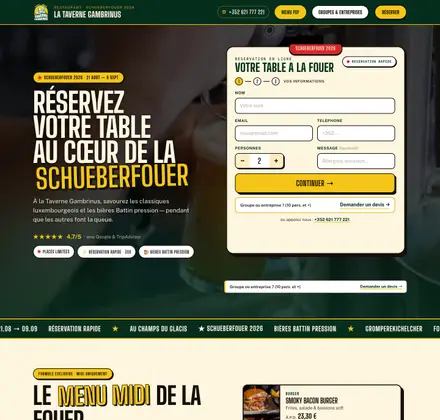
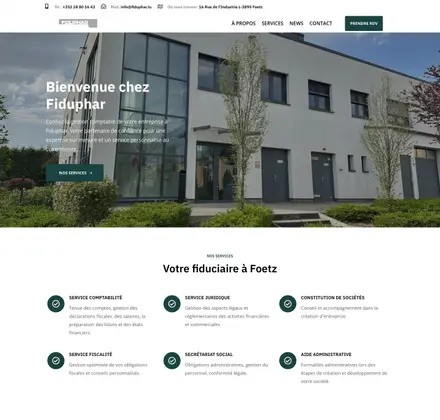
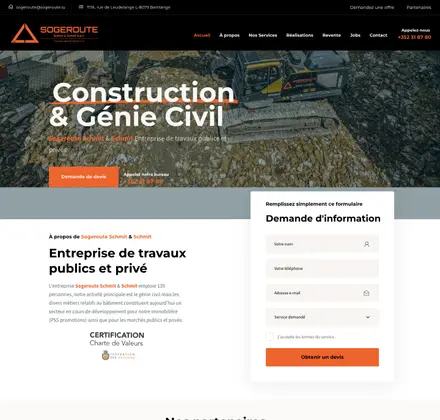



Whether you are a young start-up in full growth or you are thinking of launching your website to promote your products or services, this article is for you. Throughout this guide, you will discover how to create an outstanding site, which features are essential, and above all why building a website is a must to guarantee a solid online presence. Read to the end to learn the best practices that will make the difference, and to understand how a well-designed site can take your business to the next level.
1. Why is building a website essential for a start-up?
First reason: being visible in search results
Nowadays, search engines (Google in particular) are the main entry point for any discovery online. Having an official site is a real mark of credibility, especially for a start-up. The website serves as a shop window for your start-up, letting visitors, investors and potential customers instantly understand your vision and your products or services. Also, make sure your site is optimised for search algorithms so that it appears in search results.
Second reason: a tool for building awareness
Your website is one of the most effective channels for communicating your brand image. Without a business website, it is hard to control your online reputation or to share the information your prospects need. Indeed, building a quality website positions you as a serious player in your market. Many start-ups have understood this: the process of creating an effective website makes it possible to make your site more convincing and to strengthen your visitors’ trust.
2. How do you create a website for your start-up?
Step 1: learn how to build your platform
If you are wondering how to create a site, start by analysing your goal: do you simply want to present your products or services, or do you aim to have an e-commerce platform? The approach will differ depending on your needs. The important thing is to define the purpose clearly before moving on to choosing a creation tool or an agency specialising in website creation. There are several solutions that make it possible to create a website quickly and at low cost. Among them, building websites with platforms such as WordPress or Webflow is common for start-ups on a tight budget.
Step 2: building your site with a method
Once the goal is defined, it is time to move on to building the site. For a professional result, it is best to follow a rigorous creation process:
- Choose a clean design that is mobile-friendly so you have a web that is accessible to everyone.
- Take care over the structure of your site to guide users and make navigation for users smoother.
- Work on the content of your site by including relevant keywords to support search engine ranking. To stay up to date with SEO best practice, regularly consult the Moz Blog or the Google Search Central guide.
3. What should you take into account for a start-up website?
Why these elements matter
Among the elements to consider when building a site are the choice of a domain name, hosting, design, security and performance. You must also make sure you offer the features that will meet the needs of users. At the heart of building a website, remember that your website must be fast, secure and easy to manage.
Focus on the quality of design and content
When it comes to a start-up site, the design must be polished to inspire trust. Likewise, the content of your site must highlight your added value and line up with your goals. Think about the colours, typefaces, visuals and texts that will convey your brand identity. Finally, tags (meta titles, meta descriptions) are essential so that search engines index your online site correctly and improve the visibility of your website.
4. How do you ensure a solid online presence from the moment the site is built?
Build your website with a marketing approach
Website creation is not only a development exercise: it is also a marketing exercise. For a start-up to stand out, it must design a site that is built to attract, retain and convert users. The important thing is to have all the basics in place to optimise interactions and generate as many leads as possible. Learn to build your site with a marketing funnel logic: sales pages, calls to action, contact forms, and so on.
Specialise in creating campaigns
To strengthen your online presence, do not hesitate to create advertising or emailing campaigns. You can then target your audience better and increase traffic to your site. The aim is to build a coherent ecosystem around your website, to make your products or services known and encourage concrete actions. In addition, a good marketing plan helps you measure your results using the analytics tools available on the market, such as the HubSpot Marketing Blog.
5. How do you make your start-up website attractive to users?
Know what users expect
The key to making your site attractive lies in understanding users. They arrive on your website with precise expectations: finding information quickly, discovering your offers, or making a purchase in a few clicks. To avoid disappointing them, make sure the elements of your site are clearly organised and intuitive. That way, you will reduce the bounce rate and encourage conversion.
Offer a fluid, responsive design
A website without usability or responsive design risks losing you customers. Ease of use must always come first, especially for a young business website that wants to win market share. So make sure the loading of your site is fast, that all links work and that your layout is readable on mobiles. Good design also improves the search ranking of your site, because a well-structured site appeals to search engines.
6. Why optimise the site’s performance on search engines?
To appear in search engine results
If you want a better ranking in search results, you need to work on your SEO. In practice, this means optimising keywords, tags, URLs and internal linking to signal to the algorithms that your website answers people’s searches. This increased visibility will help you attract more qualified audience and boost conversions.
To improve your site’s performance
Site performance covers several aspects: loading speed, smooth navigation and relevant content. By taking care over these details, you will get a better user satisfaction rate. Not to mention that the better the site keeps performing, the longer visitors will stay active, which signals to search engines that your platform can be trusted.
7. How do you include all the necessary features without complicating the user experience?
Select only the essential features of your site
When building a website, the temptation is strong to add many options to impress. Yet too many elements risk drowning your message. Before adding anything, ask yourself: is this feature of your site really useful? If so, how can it be implemented simply? Focus on the features of your website that bring value, in particular contact forms, the presentation of your offers and the blog section to share your news.
Ensure consistency and simplicity
To build the site for your start-up, a clean design is often the best option. You want visitors to keep reading, so focus on legibility. Also, encourage feedback so you can adjust your strategy. Finally, a clear and consistent site makes it easier to discover all the useful features, creating a positive experience that leads to conversion.
8. What strategy should you adopt to attract more traffic to your site?
Rely on SEO and quality content
For a start-up site to perform well, it is crucial to take care over the writing of your pages and to optimise your keywords so that you appear on the first page of search engines. Regularly publishing rich content, such as blog articles or case studies, will help you climb the search results. In addition, relevant content improves the perception of your brand and helps build reader loyalty.
Create targeted marketing campaigns
Beyond SEO, you can create advertising campaigns on Google Ads or social media to grow your audience. This makes it possible to generate additional, highly targeted traffic and to increase your conversion opportunities. Also do not hesitate to build partnerships or to write guest articles on well-known blogs. The goal is to multiply your touchpoints in order to attract traffic to your site and to increase your awareness. For inspiring monitoring of the latest web innovations, take a look at Product Hunt.
9. How do you compare and choose offers to develop a bespoke website?
Analysing your needs and preparing in advance
Even before looking at providers’ offers, assess your expectations and your budget precisely. Do you want a simple brochure website or a more elaborate platform with e-commerce and advanced features? By clarifying your goals, you will be able to compare the proposals you receive better and avoid unpleasant surprises. Do not hesitate to list your technical requirements (hosting, security, maintenance) and your graphic or usability preferences.
Compare offers from professionals
If you do not want to create a website yourself, it is wise to compare different agencies or freelancers. Look at their portfolio, the solutions they offer and their knowledge of your sector. Take into account their experience in building a site for a start-up to ensure the best fit with your needs. Also ask about their client references and feedback. Be particularly vigilant about after-sales service: quality follow-up will let you develop your site smoothly and quickly resolve any technical problems.
10. What are the best practices for a high-performing, lasting start-up site?
Keep an eye on trends and optimise continuously
A high-performing start-up site is not content with good features at launch: it must be able to evolve at the same pace as your market. To do so, stay on the lookout for the latest trends in web design, development and SEO. Use analytics tools (Google Analytics, for example) to gather valuable data on the behaviour of your visitors. Watch the key statistics (conversion rate, average session duration, bounce rate) and track changes to keep adjusting your strategy. You can also consult specialist resources such as the Moz Blog or Google Search Central to stay on top of SEO updates.
Bring your community together and maintain trust
To thrive, your start-up website must be a meeting point between your offers and your audiences. Update your content, regularly offer new resources (articles, infographics, webinars) and involve your visitors through polls or comments. Encourage exchanges on social media and answer the questions asked, to build a lasting climate of trust. Whether it is a business website or a more ambitious project, building a close relationship strengthens engagement and helps widen your audience. By ensuring the quality of your service, you will set off positive word of mouth, a sign of longevity and success for your start-up.
Whether you decide to do everything yourself or to hand the task to an agency, building a site remains essential to grow your business. By following this advice and staying attentive to your audience, you will lay the foundations of a solid, scalable website, a guarantee of your start-up’s long-term success.
Do you need a website for your start-up?
Start your new adventure on the right foot.

Contact us