



In a highly competitive digital environment, a carefully optimised SEA campaign (Search Engine Advertising) can greatly improve your online visibility. But how do you maximise its impact? In this article, you will discover 7 essential tips to improve your SEA strategy, your performance and your conversion rates. Use these practical tips to improve your keywords and combine SEA and SEO to get the best return on investment.
1. Set strategic goals for your search engine advertising campaign
Before starting a paid search campaign (SEA) or search engine advertising, you must first define precise goals. In this case, the SMART method (Specific, Measurable, Achievable, Realistic, Time-bound) can help you.
A clear goal, such as increasing the number of visitors by 25% in three months, helps you assess your results properly. It also helps you choose keywords, ads and bids.
Defining your goals clearly has a direct impact on your results. If you want to attract quality potential customers, it is essential to adapt your ads to maximise engagement rather than simply generating a large number of clicks.
Clear goals help you keep improving all the time. You can change your bids, try new types of ads and choose your audience better to get better results.
2. Find and use the most relevant keywords
Choose the right keywords, because they are the key to a successful online advertising campaign. With a strategic approach, you improve targeting and optimise the amount of traffic you get for your advertising budget. So start by favouring long-tail keywords.
Indeed, they generate more qualified traffic by targeting specific searches. For example, “lightweight marathon running shoes” will convert better than “sports shoes”.
To get the best ones, use tools such as Google Ads Keyword Planner or SEMrush, for example. Analyse search volume and competition to fine-tune your list. Also pay attention to negative keywords. They stop your ads from showing on irrelevant searches. For example, excluding “free” avoids pointless clicks.
By combining targeted keywords with strategic exclusions, you reduce costs and improve the overall performance of your campaign.
3. Write punchy ads for SEA
If you want an impactful advertising campaign, make sure you craft an effective, engaging message. The best ad is the one that grabs attention while stirring up desire and even demand. To improve relevance, use a catchy headline that includes your main keywords. In addition, state a clear value proposition and a call to action.
It is a good idea to create two ads and run an A/B test. Compare two headlines: 20% off your first purchase and Exclusive offer: 20% off straight away. Based on the comparison, you can adjust the text and set up the campaign as needed. It is also essential not to underestimate the importance of visuals, especially when you use Google Display or YouTube ads. Try bright colours against muted tones to see what attracts the most clicks.
Together, these adjustments will let you optimise your conversion rate and make your advertising budget pay off.
4. Build optimised landing pages

An effective search engine advertising (SEA) or Google Ads campaign relies on carefully optimised landing pages to maximise the conversion rate of clicks. The landing page must be both relevant and consistent with the ad that prompted the click. The content must be concise and focused on the benefits the user will get from it. Use clear headings and short paragraphs to hold the reader’s attention. Visitors must grasp the offer you are presenting straight away.
Calls to action (CTAs) must be clearly visible and especially impactful. For example, a button labelled “Sign up now” or “Try for free” encourages visitors to take immediate action. Also make sure these calls to action are positioned appropriately, preferably at the top of the page. Also optimise the page loading speed and test different versions so you keep improving the user experience and maximise your conversion rates.
5. Budget management for a profitable campaign
Setting an optimal budget for search engine advertising requires a strategic approach. It must be consistent with your business goals and adjusted regularly. Start with an analysis of the average cost per click (CPC) of your chosen keywords. Set a flexible daily budget to optimise your return on investment (ROI). Adjust your bids according to the performance of your ads and the most profitable periods.
Constantly monitor your key metrics (CTR, conversion rate, CPA). Use the Google Ads dashboards to spot trends and refine your campaigns in real time. Ongoing analysis lets you adapt your budget to market changes.
Test different strategies: raising bids on high-performing keywords, reallocating budget to ads with strong potential. Be responsive to analytical insights to maximise the effectiveness of your SEA campaign.
6. Use remarketing to increase conversion rates
Remarketing makes it possible to target visitors who have already shown interest in your website but have not converted. It increases visibility and engagement. To make it as effective as possible, we recommend segmenting your audiences by behaviour. For example, you should distinguish visitors who abandoned a basket from those who only viewed a product page.
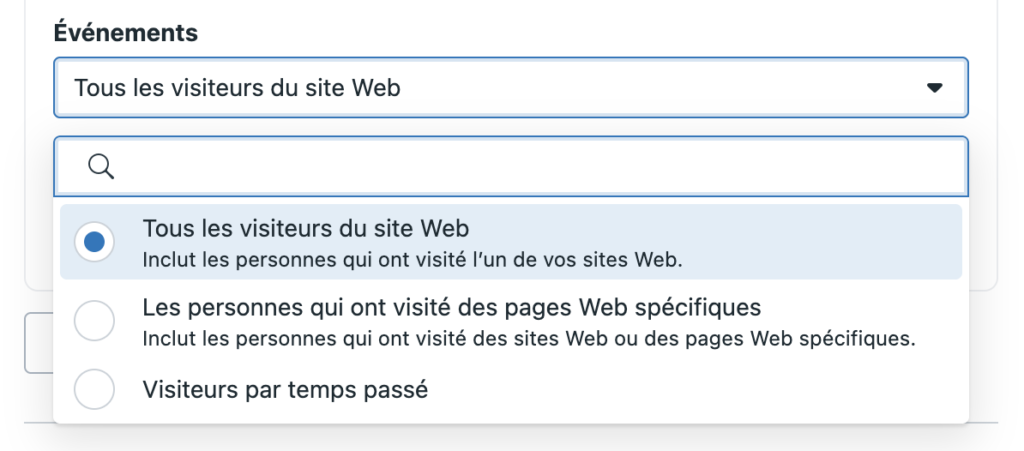
Adjust your ads to each customer segment . Offer a discount to undecided users or highlight reassuring customer testimonials. You can use dynamic targeting to show recently viewed products. This creates a relevant reminder and encourages people to come back to your website.
7. Align paid search (SEA) and organic search (SEO) strategies for a fruitful synergy
To optimise visibility on search engines, we recommend creating a synergy between your campaign (SEA) and your organic search (SEO) strategy. These levers turn out to be complementary. SEA provides instant visibility, while SEO ensures a lasting presence. By combining them, you cover both short-term and long-term needs.
Make use of data from search engine advertising to optimise your SEO. Analyse the most effective keywords and work them into your organic content in a suitable way. Conversely, pages that rank well in organic search can be used as landing pages for your online ad campaigns. This improves their quality score while lowering the cost per click.
CONCLUSION
An effective paid search campaign relies on a carefully optimised strategy and regular adjustments. By putting these seven strategies into practice, you optimise your visibility and maximise your return on investment.

Lola MinervaCommunication and web marketing
Communication and web marketing expert at AR Digital, with a master’s degree in communication and web marketing. Since 2019 she has designed digital and content strategies for brands in France and Luxembourg.